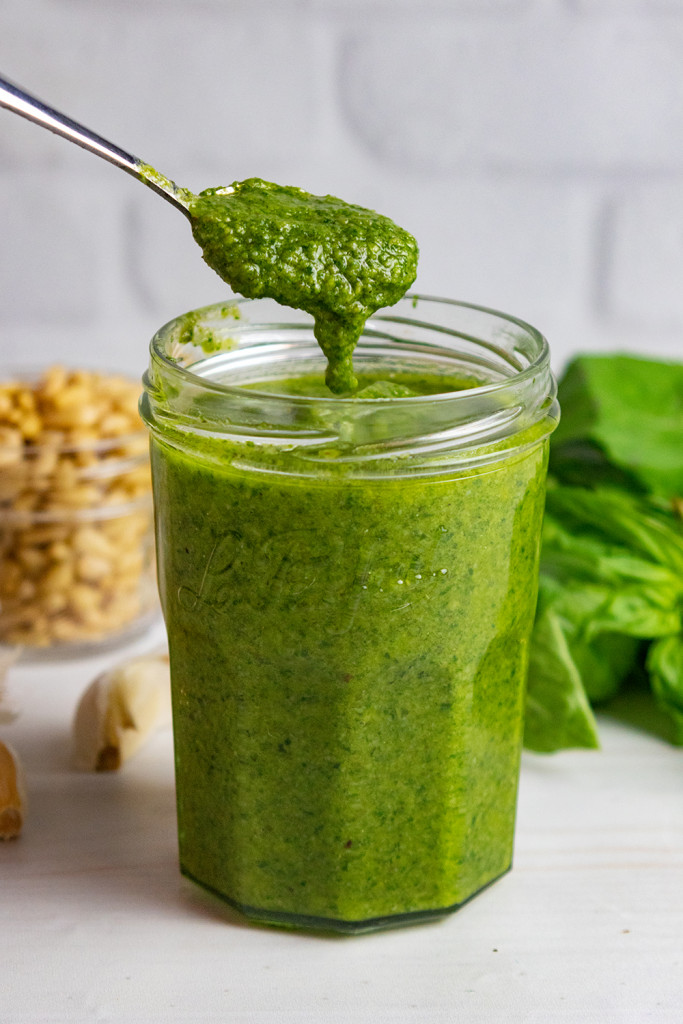
The most basic, most traditional pesto is this basil-based one that was invented in Genoa, in northern Italy; it's bright green and wonderfully aromatic. Be sure to add your oil slowly, so that the sauce fully emulsifies - that is, all the ingredients bind together, creating a thick, uniform consistency.
Lots of basil varieties are available, some sweeter, some spicier, and in fact basil is an important ingredient in the cooking of southeast Asia, especially in curries. Each variety will impart its unique flavor to a pesto, so be adventurous, and try whatever type appeals to you. Just remember: you need a lot of it, and it should be fresh and crisp, not wilted or soggy.
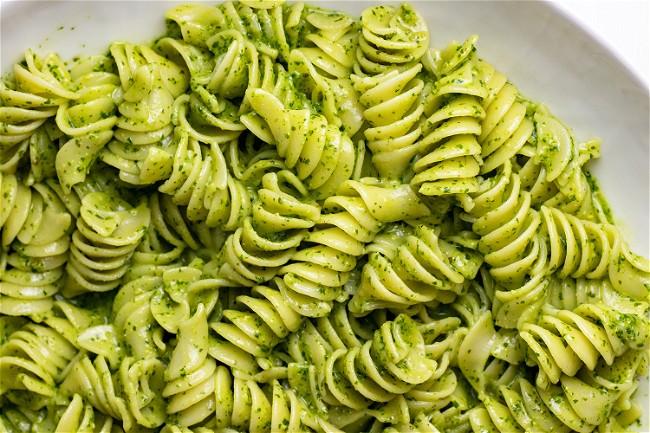
The secret to making pesto into a great pasta dressing is to get the sauce to the right consistency. Fresh from the food processor, pestos are usually too thick to coat pastas; you'll just end up with mounds of the sauce amid a lot of undressed noodles. You need to mix in just enough of the pasta cooking liquid to coat the pasta, but not so much that you've created pesto soup.
Giada's Classic Pesto
Category
condiment Salad Dressing sauce
Servings
6
Prep Time
5 minutes
Ingredients
2 cups fresh basil leaves, (packed)
1/4 cup toasted pine nuts
1 garlic clove
1/2 teaspoon kosher salt, (plus more to taste)
1/4 teaspoon ground black pepper, (plus m ore to taste)
In a blender or food processor, pulse the basil, pine nuts, garlic, 1/2 teaspoon of salt, and 1/4 teaspoon of pepper until finely chopped. With the blender still running, gradually add enough oil to form a smooth and thick consistency. Transfer the pesto to a medium bowl and stir in the cheese. Season the pesto with more salt and pepper to taste.
The pesto can be made 2 days ahead. Cover and refrigerate.
This was my first experience making and eating homemade pesto. The recipe was easy to follow and resulted in some delicious pesto which I served over pasta. My husband, who’s a big fan of pesto, loved it and so did I! Thanks for the recipe!
Judy Pasqualone - Jun 09
★★★★★
★★★★★
I make mine exactly like this. Made some the other day and added some mushrooms and stuffed a pork tenderloin. Yum!
Corliss Christiansen - Jun 09
★★★★★
★★★★★
This is a very straight forward Classic pesto. I like the tip on thinning with pasta water, if needed. I like to mash goat cheese with pesto and add some additional toasted pine nuts, then make a slit in a chicken breast and fill with mixture prior to baking. Use a toothpick to keep closed, if needed. I respectfully disagree with the comment about Classic Genoese pesto not including garlic. According to the CONSORZIO DEL PESTO GENOVESE, which defines what is considered official Pesto Genovese, it does contain garlic. Pepper is not included in their official version, but a simple fix and/or a matter of taste. Google the source for additional information on the use of garlic.
Moarton Spamzarelli - Jun 09
★★★★★
★★★★★
I can assure you this is not an authentic Genovese pesto recipe. In Genova the traditional recipe simply does not add pepper or garlic. And it is magnificently delicious in its simplicity. Buon appetito!
Jim Magnusson - Jun 09
★★★★★
★★★★★
Best Pesto Sauce I have ever made … great recipe!!
Dianne Husick - Jun 09
★★★★★
★★★★★
This is my favorite pesto recipe! Have made it for many dinners with friends! Always a crowd pleaser!
Christopher Voisin - Jun 09
★★★★★
★★★★★
Definitely my one and only pesto!!!! Great balance and flavor 👍
Renee Rich - Jun 09
May I ask, how long will this last in the refrigerator? I have a huge basil plant and winter has arrived. Can I freeze it in containers with a small layer of olive oil on top?
Michelle Yarris - Jun 09
★★★★★
★★★★★
This is my go to pesto. We love it!! Easy and delicious!!
Susan Piepenbrink - Jun 09
Hi I love making pesto with fresh arugula than basil love the peppery taste😀




10 comments
This was my first experience making and eating homemade pesto. The recipe was easy to follow and resulted in some delicious pesto which I served over pasta. My husband, who’s a big fan of pesto, loved it and so did I! Thanks for the recipe!
I make mine exactly like this. Made some the other day and added some mushrooms and stuffed a pork tenderloin. Yum!
This is a very straight forward Classic pesto. I like the tip on thinning with pasta water, if needed. I like to mash goat cheese with pesto and add some additional toasted pine nuts, then make a slit in a chicken breast and fill with mixture prior to baking. Use a toothpick to keep closed, if needed. I respectfully disagree with the comment about Classic Genoese pesto not including garlic. According to the CONSORZIO DEL PESTO GENOVESE, which defines what is considered official Pesto Genovese, it does contain garlic. Pepper is not included in their official version, but a simple fix and/or a matter of taste. Google the source for additional information on the use of garlic.
I can assure you this is not an authentic Genovese pesto recipe. In Genova the traditional recipe simply does not add pepper or garlic. And it is magnificently delicious in its simplicity. Buon appetito!
Best Pesto Sauce I have ever made … great recipe!!
This is my favorite pesto recipe! Have made it for many dinners with friends! Always a crowd pleaser!
Definitely my one and only pesto!!!! Great balance and flavor 👍
May I ask, how long will this last in the refrigerator? I have a huge basil plant and winter has arrived. Can I freeze it in containers with a small layer of olive oil on top?
This is my go to pesto. We love it!! Easy and delicious!!
Hi I love making pesto with fresh arugula than basil love the peppery taste😀